Las Vegas Wash & Flood-Channel Crossings
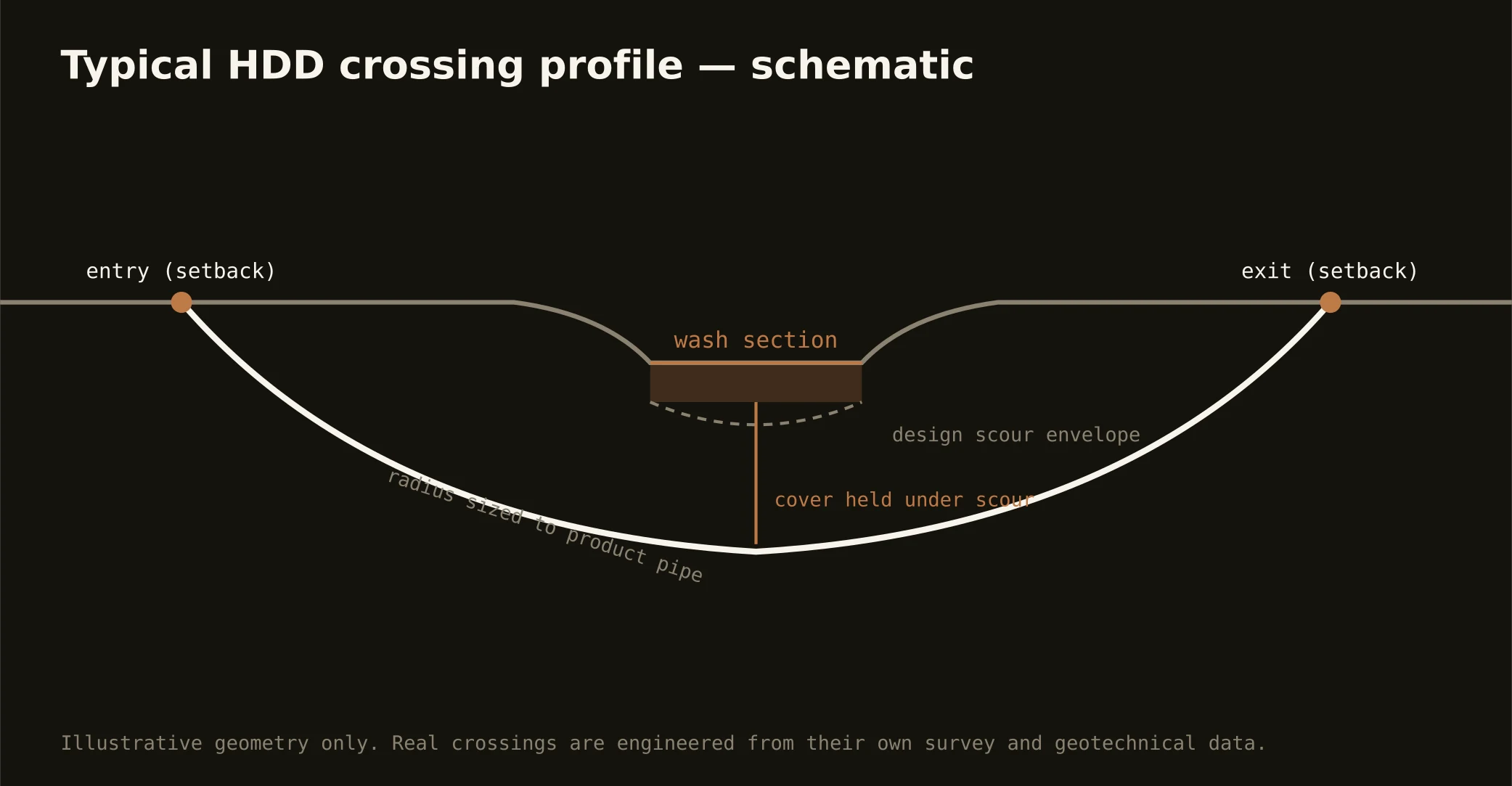
The valley's water infrastructure is built for rare violence: a regional network of washes, concrete channels, and detention basins engineered to move a desert storm's runoff from the mountains to the Wash — and through it, back toward the lake the valley drinks from. Utility routes cross this network constantly, and the flood-channel crossing is the signature valley bore: entry and exit set clear of the facility's right-of-way, a profile holding the district's required cover under the channel section, and absolutely nothing that compromises a structure whose one job is the worst day of the decade.
The permitting is engineering-forward: the flood district's criteria govern crossings of its facilities, with the local jurisdiction and any road or rail owner layered on, and the Wash itself — the valley's accidental river, running year-round on the metro's return flows — adds environmental and reclamation interests along its restored reaches. Our quotes cite the actual facility, its governing criteria, and the honest clocks.
Technically, wash crossings concentrate the valley's ground problem: channel alignments cut through the same cemented alluvium as everywhere else, so the sag is often drilled partly in caliche — priced as such — while fluid discipline runs tight, because a return into a flood facility or the Wash's flow is an incident with agencies attached. Containment staged, pressures conservative, response plan written before the pilot turns.